 Softwarevia Self Hosted
FuseBase ReviewThe Client Portal Tool Built for Agencies — Not Internal Teams
By Morgan Ellis
FuseBase is the white-label client portal platform agencies use to replace scattered Google Docs, Slack threads, and client emails with a single branded workspace. At $79 one-time on AppSumo, it's the lowest-cost entry to client portal software in its category. Honest limitation: no relational databases — if your clients need structured data queries, Notion or Airtable are better fits.
Product Rating
Starting Price
Pricing Model
Free Trial
Free Plan
Category
AT A GLANCE
Pricing
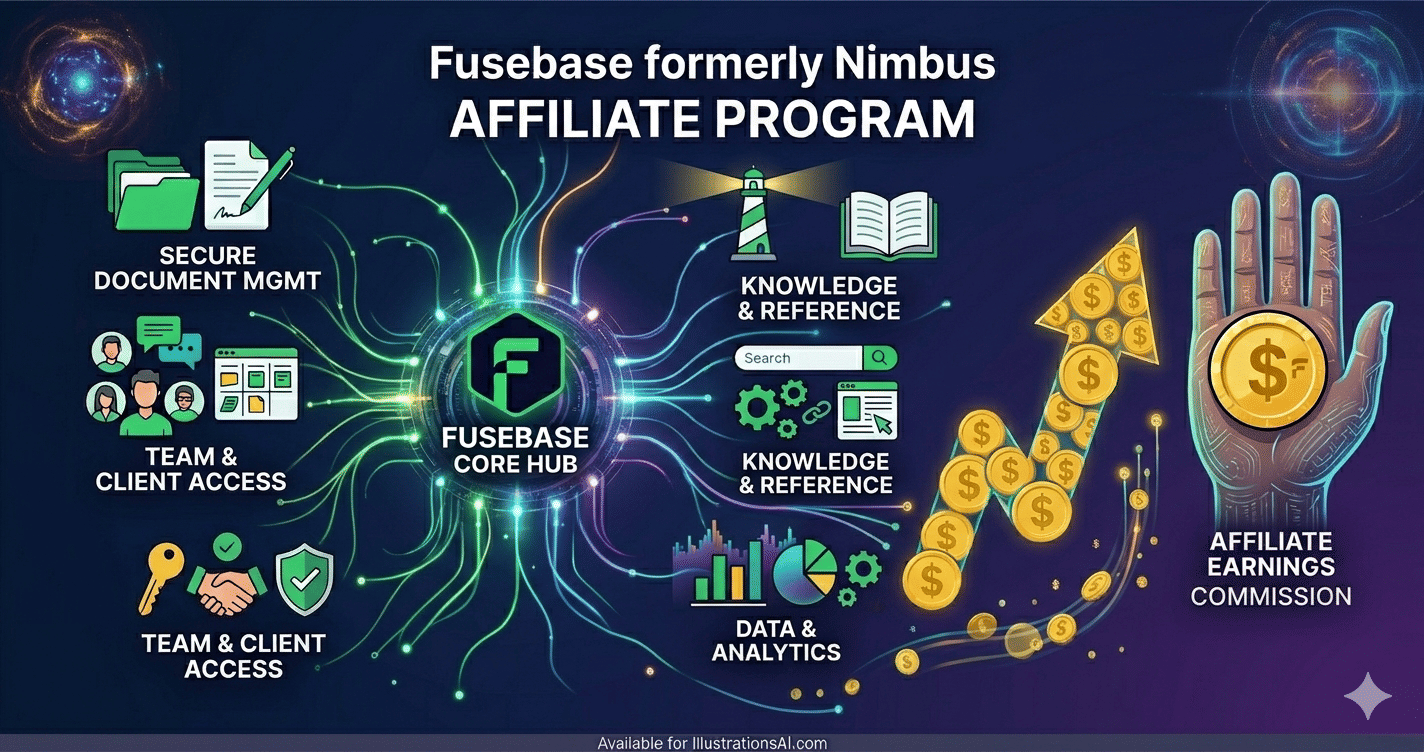
Subscription plans (monthly subscribers, billed annually): Starter ~$38/month, Professional ~$49/month, Enterprise custom pricing. AppSumo lifetime deal (when available): Tier 5 at $395 one-time — includes HIPAA/SOC2 compliance features typically costing $5,000+/year in enterprise alternatives. 14-day free trial, no credit card required. Self-hosted affiliate program: 40% of first payment + 20% of all renewals.
Alternative to
Notion, ClickUp, Basecamp, Monday.com, Clinked
Best for
Agencies Managing External Client Deliverables, Consultants Replacing Scattered Google Docs and Email Threads, Healthcare and Legal Agencies Requiring HIPAA Compliance (Tier 5), Web Development Studios Sharing Project Milestones with Clients, Coaches and Service Providers Delivering Structured Programs
▶ Ready to explore?
Try FuseBase →Pros
- ✓White-labelled client portals — clients see your brand, not FuseBase's
- ✓HIPAA and SOC2 compliance at Tier 5 — rare at this price for agencies in regulated industries
- ✓AppSumo LTD Tier 5 ($395 one-time) replaces $5,000+/year enterprise alternatives
- ✓Structured deliverable management replaces unstructured email and Slack threads
- ✓Former Nimbus Note user base creates a ready-to-convert pre-warmed audience
Cons
- ✗No relational database functionality — not a Notion replacement for data-heavy workflows
- ✗Mobile app lags behind the web interface — limited for on-the-go use
- ✗30-minute setup learning curve for portal structure configuration
- ✗Self-hosted affiliate program lacks neutral third-party tracking transparency
- ✗Attribution model and cookie duration not publicly documented
Who Should Skip FuseBase
Teams who use Notion's relational database features extensively. FuseBase has no relational database — linked databases, filtered views, and structured data relationships are not available. If your internal workflow depends on Notion databases, FuseBase cannot replace them. Use Notion for internal documentation and databases; use FuseBase for external client-facing portals.
Solo users or individuals with no client-facing deliverables. FuseBase's differentiated features — white-label portals, client permission controls, structured deliverable handoff — add no value without external clients or stakeholders. For personal note-taking and solo project management, simpler tools like Notion or Obsidian are better fits at lower or no cost.
Consider instead: AppSumo — AppSumo frequently features personal productivity and note-taking tools as lifetime deals. FuseBase itself has appeared on AppSumo — check if an active deal is live.
Teams who need strong mobile functionality. FuseBase's mobile app is functional but limited compared to the web interface. If your team manages client work primarily on mobile devices, the mobile app limitations will create friction. Test the mobile app during the 14-day trial before committing.
▶ Ready to start?
Start with FuseBase →▶ About This Software
FuseBase was formerly known as Nimbus Note — a note-taking and workspace tool that rebranded in 2024 when the company pivoted its product focus from personal note-taking to external client collaboration. Former Nimbus Note users who encounter FuseBase are not looking at a different company; they're looking at a more mature, agency-focused version of a product they already know.
The core product is a white-labelled client portal system. Agencies use FuseBase to give clients a dedicated, branded workspace for reviewing deliverables, approving assets, tracking project milestones, and managing communication — all in one place instead of scattered across email threads, Slack DMs, and shared Google Docs folders. The client sees your agency's branding, not FuseBase's.
The HIPAA compliance at Tier 5 is a genuine differentiator. Most client collaboration tools don't offer HIPAA-compliant plans below $200/month or $2,400/year. The AppSumo Tier 5 deal ($395 one-time, when available) makes HIPAA compliance accessible to healthcare agencies, legal firms, and financial advisory practices that previously couldn't afford enterprise pricing.
For affiliates: FuseBase's self-hosted program pays 40% of the first payment plus 20% of every renewal. A referred Professional plan subscriber at $49/month generates $19.60 at signup then $9.80 on every subsequent month. Over 24 months, one referral produces approximately $245 in total commissions. Verify current rates directly from FuseBase before building content around specific figures.
▶ Key Features
White-Label Client Portals
FuseBase's primary differentiator. Configure a client portal with your agency's logo, brand colors, and custom domain — clients access a workspace that looks like your agency's software, not a third-party tool. Each client gets their own isolated workspace with only their files, projects, and communications visible. For agencies where brand consistency with clients matters, white-labelling removes the friction of explaining 'we use FuseBase' to every new client.
HIPAA and SOC2 Compliance (Tier 5)
FuseBase's Tier 5 plan includes HIPAA Business Associate Agreement (BAA) and SOC2 compliance documentation — requirements for agencies working with healthcare, legal, or financial clients. Enterprise alternatives with equivalent compliance typically cost $2,000–$5,000+/year. The AppSumo Tier 5 lifetime deal (when available at $395) makes compliance-grade client portals accessible to small agencies and solo practitioners in regulated industries.
Nimbus Note Rebrand — What Changed
FuseBase launched in 2024 as a rebranded pivot of Nimbus Note. The core note-taking and document functionality remains, but the product emphasis shifted from personal productivity to external client collaboration. Former Nimbus Note users retain their data and account history. The rebrand also introduced expanded portal features, improved permission controls, and the HIPAA compliance tier — capabilities Nimbus Note's personal-use focus didn't require.
Structured Deliverable Management
FuseBase organizes client work into a structured hierarchy: workspaces → projects → sections → items. Deliverables (documents, assets, feedback forms) attach to specific project items with approval workflows, comment threads, and version history. For agencies managing multiple active client projects simultaneously, this structure replaces the ad-hoc organisation of shared Google Drive folders and email attachments.
Learning Curve — 30 Minutes to First Portal
FuseBase has a learning curve primarily in the portal configuration stage. SaaSNik's review quantifies this as approximately 30 minutes to configure a functional client portal from scratch, compared to Notion's more immediate accessibility. The complexity is front-loaded — once the portal template is set up for one client, duplicating it for additional clients takes under 5 minutes.
▶ Who Should Use This
Digital Marketing Agencies Managing Client Campaigns
Agencies sharing campaign reports, creative assets, and performance dashboards with clients benefit from FuseBase's structured portal environment. The client sees a clean, branded interface rather than a raw shared folder or a Notion page they weren't trained to navigate. Feedback collection, approval workflows, and comment threading reduce the back-and-forth email cycle that consumes agency account management time.
Healthcare, Legal, and Financial Advisory Agencies
Agencies in regulated industries need HIPAA and SOC2 compliance for any tool that handles client data. FuseBase's Tier 5 provides this at a fraction of enterprise alternative pricing. For a healthcare consulting firm sharing patient-adjacent documents with clients, or a legal agency managing case documentation, FuseBase's compliance tier makes structured client portals accessible without enterprise budgets.
Coaches and Course Creators Delivering Structured Programs
Individual coaches and course creators who currently deliver program content via email drips, Google Docs, or Teachable can use FuseBase portals to create a professional, branded client experience. Each client gets their own workspace with their curriculum, homework submissions, and direct communication — replacing fragmented delivery methods with a single structured environment.
▶ Pricing
Subscription plans (monthly subscribers, billed annually): Starter ~$38/month, Professional ~$49/month, Enterprise custom pricing. AppSumo lifetime deal (when available): Tier 5 at $395 one-time — includes HIPAA/SOC2 compliance features typically costing $5,000+/year in enterprise alternatives. 14-day free trial, no credit card required. Self-hosted affiliate program: 40% of first payment + 20% of all renewals.
Subscription (annual billing): Starter ~$38/month, Professional ~$49/month, Enterprise custom. Monthly billing increases price approximately 20–25%. 14-day free trial included on all plans. AppSumo lifetime deal (availability varies): Tier 1–Tier 5, with Tier 5 at $395 one-time including HIPAA/SOC2. Affiliate program: self-hosted, 40% first payment + 20% all renewals, no stated cap. Verify current subscription pricing at fusebase.com — pricing has been updated periodically. Affiliate note: AppSumo 60-day refund window means chargebacks can reverse commissions on lifetime deal referrals — factor this into your content approach.
▶ Use Cases
A digital marketing agency replacing email threads with client portals
An agency managing 10 active client accounts previously maintained one Slack channel per client, one shared Google Drive folder per client, and a mix of email threads for approvals. FuseBase consolidates this into one branded portal per client — deliverables attach to project milestones, clients comment in-context rather than via email, and approval status is visible in a dashboard rather than inferred from the most recent email reply.
A healthcare consulting firm needing HIPAA-compliant client workspaces
A healthcare IT consulting firm sharing implementation documentation with hospital clients needs HIPAA compliance for any cloud tool handling client data. FuseBase's Tier 5 AppSumo deal provides a BAA for $395 one-time — versus $2,400+/year for comparable enterprise alternatives. The one-time pricing makes HIPAA-grade client portals economically viable for small practices and solo consultants that the enterprise pricing tier previously excluded.
A digital marketing agency replacing Notion with a client-facing portal
A digital marketing agency currently using Notion internally and Google Docs externally consolidates both into FuseBase. The setup: internal workspaces mirror the Notion structure; client-facing portals are white-labeled with the agency brand and client logo. Clients see campaign reports, deliverable timelines, and project updates through a branded portal rather than shared Google Drive links. Agencies report reducing client email volume by 60% in the first month after setup. The AppSumo Tier 3 deal at $237 one-time covers the full team and multiple client workspaces without recurring cost.
▶ Make it official
Get FuseBase →▶ Frequently Asked Questions
What happened to Nimbus Note — is FuseBase the same company?
Yes. FuseBase is the rebranded version of Nimbus Note, which launched in 2024 as a strategic pivot from personal note-taking to external client collaboration. The company and development team are the same; the product focus shifted. Former Nimbus Note users retain their accounts, data, and access history — nothing was lost in the transition. The rebrand accompanied the introduction of client portal features, improved permission architecture, and HIPAA compliance tiers that the personal note-taking positioning didn't require.
Is FuseBase a good Notion alternative?
It depends on what you're replacing Notion for. FuseBase is better than Notion for external client-facing workspaces — white-label portals, client permission controls, and structured deliverable management are capabilities Notion lacks. Notion is better than FuseBase for internal documentation with relational databases — linked database views, filtered tables, and structured data relationships are Notion's core strength and FuseBase has no equivalent. The honest recommendation: use Notion for internal wikis and data management; use FuseBase for client-facing portals. Many agencies already run both.
Does FuseBase have HIPAA compliance?
Yes, on the Tier 5 plan. FuseBase's Tier 5 includes a HIPAA Business Associate Agreement (BAA) and SOC2 compliance documentation, making it eligible for use by healthcare, legal, and financial agencies handling sensitive client data. The AppSumo Tier 5 lifetime deal (when available) provides these compliance features at a one-time cost significantly below enterprise alternative pricing. Verify the current compliance tier specifications directly with FuseBase before using the platform for regulated industry client data — compliance requirements and plan inclusions should be confirmed in writing with your BAA.
How much does FuseBase cost?
Subscription plans (billed annually): Starter approximately $38/month, Professional approximately $49/month, Enterprise at custom pricing. Monthly billing is available at a premium of approximately 20–25% above the annual rate. A 14-day free trial is included with no credit card required. The AppSumo lifetime deal (when live) ranges from Tier 1 to Tier 5, with Tier 5 at $395 one-time including HIPAA/SOC2 compliance. Current pricing should be verified at fusebase.com as rates have been updated periodically.
How does FuseBase compare to Basecamp and Monday.com?
FuseBase, Basecamp, and Monday.com all serve project-based work, but with different primary audiences. FuseBase is optimized for external client-facing collaboration — the white-label portal and client permission model are its core differentiators. Basecamp's client access model is functional but limited in customisation; its primary strength is internal team project management. Monday.com is a work operating system with broad automation capabilities, better suited for internal process management than client deliverable portals. For agencies whose primary pain point is the client communication experience, FuseBase's external collaboration focus is more specifically matched than either Basecamp or Monday.com.
What is FuseBase's learning curve?
FuseBase has a front-loaded learning curve primarily in the initial portal configuration. SaaSNik's review documents approximately 30 minutes to configure a functional client portal from scratch — structuring workspaces, setting up permission tiers, and customising branding. Once a portal template is established for one client, duplicating it for additional clients typically takes under 5 minutes. The mobile app has a steeper usability curve than the web interface and is better suited for viewing than for configuring portal structures. Schedule the initial setup when you have uninterrupted time; the ongoing management is straightforward once the template is in place.
What is the FuseBase affiliate program?
FuseBase's self-hosted affiliate program pays 40% of the first payment from each referred customer, then 20% recurring commission on every renewal payment for as long as the customer remains subscribed. A referred Professional plan subscriber at $49/month generates $19.60 at signup, then $9.80 on each subsequent monthly payment. Over 24 months, one referral produces approximately $245 in total commissions. The program is self-hosted — attribution, tracking, and payment are managed by FuseBase's own systems, not a neutral third-party network. Verify current rates, cookie duration, and payout terms directly from FuseBase before building major content campaigns around specific figures.
▶ How to Promote FuseBase as an Affiliate
FuseBase converts best within the agency niche — specifically agency owners and freelancers who need a client portal — a single place to share deliverables, collect approvals, manage tasks, and communicate with clients without email chains. The former Nimbus Note users who lost their tool in the rebrand are a high-intent secondary audience: they are actively searching for alternatives and already understand the product category.
The recurring affiliate commission via PartnerStack rewards content that drives long-term subscribers. Agencies that adopt FuseBase tend to stay because the client portal becomes embedded in their workflow. Best content formats: "best client portal software" roundups, FuseBase vs Notion vs Monday.com comparisons for agency use cases, and tutorial content showing a complete agency-to-client workflow built inside FuseBase. The Nimbus Note angle — "FuseBase was formerly Nimbus Note" — captures high-intent branded search from former users.
The storage-per-plan limitation and the learning curve for new users are the two objections to address proactively. Readers who encounter them after purchasing will not return for your next recommendation.
The 20% renewal commission generates passive income that compounds as the customer base grows — each referred agency on a $49/month plan adds $9.80/month indefinitely.
Want to earn commissions promoting FuseBase?
View the FuseBaseAffiliate Program →▶ Related Terms